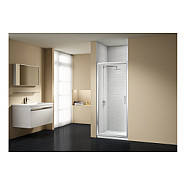
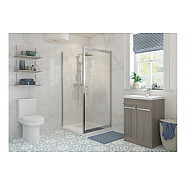
**Infold shower doors and enclosures** are shower access systems where the door panels **fold inward toward the shower tray** when opened. This makes them especially useful in bathrooms where space in front of the shower is limited, because the doors do not swing out into the room.
In an infold setup, the shower door is attached on hinges or pivot points so that, instead of swinging outward like a traditional hinged door, the panel folds inside the enclosure. This folding action reduces the clearance needed and keeps the opening compact, helping to save space in smaller bathrooms, en-suites, or cloakrooms.
The glass panels in infold doors are usually made from **toughened safety glass** for strength and durability. They can be clear for an open look or frosted/textured for added privacy. The door hardware — including hinges and handles — is available in finishes like chrome, black, brushed nickel, or white to coordinate with other bathroom fittings.
Infold doors can be used in a variety of shower enclosure shapes, including **square, rectangular, and corner enclosures**. They are often chosen where a traditional outward-swinging door might be obstructed by a toilet, basin, or other fixture.
Key advantages of infold shower doors include:
* **Space efficiency:** The inward folding action eliminates the need for clearance outside the shower.
* **Easy access:** Folding panels create a wide doorway without intruding on bathroom layout.
* **Cleaner profile:** They help maintain a neat, unobstructed appearance in the shower area.
Because the panels fold inside, effective water sealing around the edges is important to prevent water escaping when the shower is in use. Regular wiping of the glass and tracking can help maintain smooth operation and appearance.
In summary, infold shower doors and enclosures offer a practical, space-saving way to enter and exit the shower. Their inward folding panels make them ideal for compact bathrooms where floor space is limited, while still providing reliable water containment and a modern, functional design.